
WhatsApp is transforming how businesses connect with customers. With a 98% open rate and over 2.7 billion active users, it’s a powerful tool for engagement. From retail to real estate, brands are using WhatsApp to boost sales, generate leads, and improve customer experiences. Here are 7 campaigns that illustrate WhatsApp’s potential:
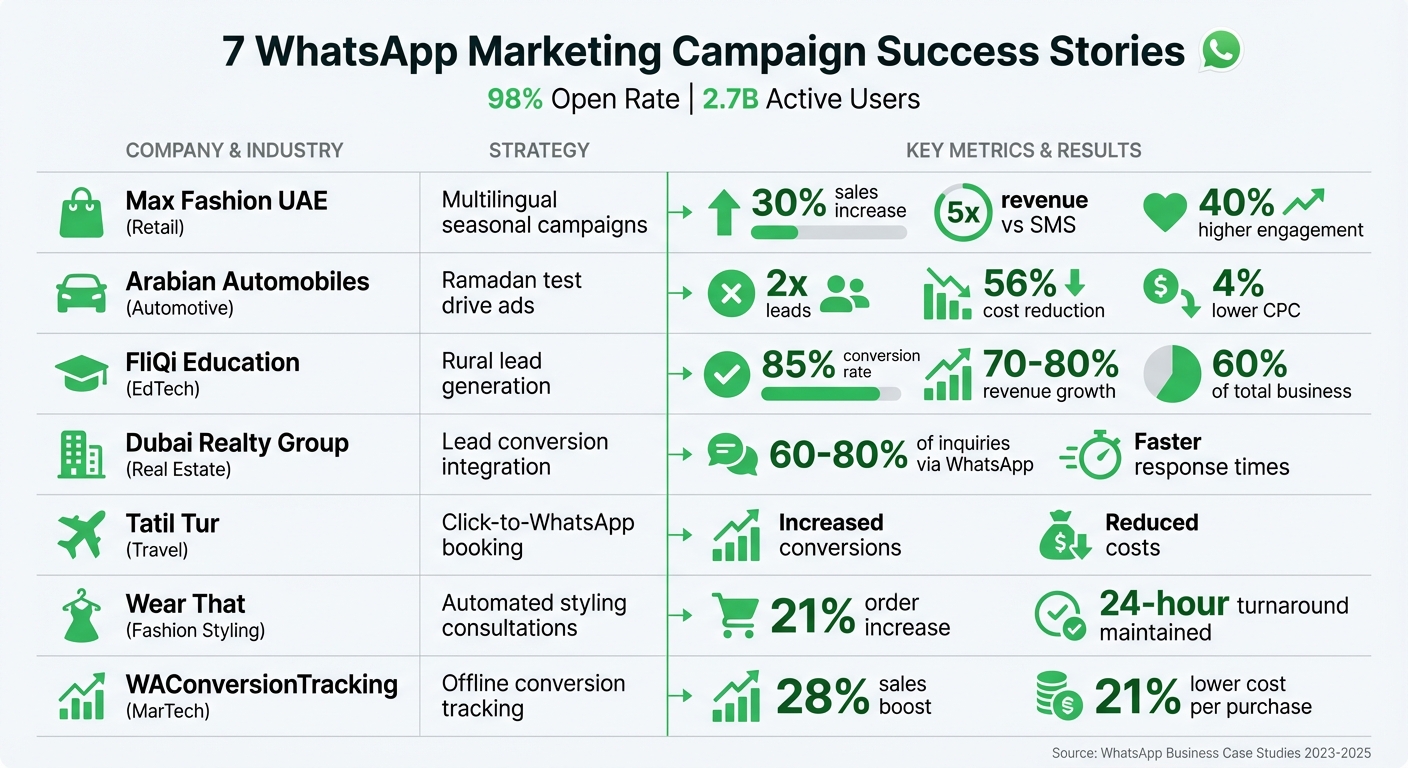
- Max Fashion UAE: Multilingual campaigns during Ramadan and White Wednesday drove a 30% sales increase and 5x revenue vs SMS campaigns.
- Arabian Automobiles: Ramadan test drive ads on WhatsApp doubled leads and cut costs by 56%.
- FliQi Education: Rural India-focused campaign achieved an 85% lead-to-conversion rate and 70-80% revenue growth.
- Dubai Realty Group: Real estate firms reduced lead drop-offs and sped up responses with WhatsApp integrations.
- Tatil Tur: Travel bookings simplified with WhatsApp ads, increasing conversions while reducing costs.
- Wear That: Automated fashion styling consultations boosted orders by 21%.
- WAConversionTracking: Improved ad performance with precise tracking, boosting sales by 28%.
These examples show how businesses can use WhatsApp to personalise communication, streamline processes, and improve results. Each campaign tailored its approach to its audience, leveraging WhatsApp’s features to achieve measurable success.
7 WhatsApp Marketing Campaign Results Comparison
WhatsApp Marketing: 3 Best Practices for Your Business
1. Max Fashion's Multilingual Seasonal Campaigns in the UAE
Max Fashion, part of the Landmark Group, took a smart approach to connect with the UAE's multicultural audience through a targeted WhatsApp campaign. By leveraging CRM data - such as language preferences, nationality, and purchase history - the retailer delivered messages in both Arabic and English. But this wasn't just about translating text. The campaign tailored its content to reflect the cultural subtleties of both expatriate and Emirati communities.
For Ramadan, Max Fashion combined influencer partnerships with personalised WhatsApp messages, resulting in a 30% year-on-year sales boost. This strategy capitalised on the trust influencers build with their audiences while directly engaging customers during one of the UAE's busiest shopping seasons. On White Wednesday, the brand turned to urgency-driven rich media carousels, which brought in five times the revenue compared to SMS campaigns.
To further enhance customer engagement, Max Fashion automated a first-purchase journey using a structured sequence of messages. This initiative saw a 40% higher engagement rate compared to other communication channels.
Max Fashion's success highlights the importance of culturally aware, interactive messaging tailored for platforms like WhatsApp. Their mix of precise audience targeting, influencer collaboration, and automation demonstrates how businesses can thrive in diverse markets like the UAE.
2. Arabian Automobiles Company's Ramadan Test Drive Campaign
Arabian Automobiles Company (AAC), the exclusive distributor for Nissan, INFINITI, and Renault across Dubai, Sharjah, and the Northern Emirates, launched the "Un-interrupted Togetherness" campaign on WhatsApp during Ramadan 2023. Running from 17 March to 30 April, the campaign was perfectly aligned with the holy month's emphasis on family and heightened consumer activity. This timing allowed AAC to connect with its audience in a meaningful and efficient way.
Using Click-to-WhatsApp ads on Facebook and Instagram, AAC made it incredibly easy for customers to engage. With just one tap, users could send a pre-filled message to start a conversation. Automated replies filtered these inquiries, ensuring only high-intent leads were passed on to sales consultants.
To refine their approach, AAC tested two types of ad strategies: single-source ads (directing users to either WhatsApp or the website) and dual-destination ads (giving users the option to choose between the two). The results were clear - dual-destination ads outperformed single-source ads, generating twice as many leads, cutting the cost per lead by 56%, and reducing the cost per click by 4%. This strategy was particularly effective in a region where 76% of consumers prefer interacting with brands via WhatsApp.
The campaign also featured Ramadan-specific offers, including a 0.99% profit rate, a five-year unlimited mileage warranty on the Nissan Patrol, and complimentary pick-up and drop-off services. These incentives added extra appeal for customers during the festive season.
3. FliQi Education's Rural Lead Generation Campaign
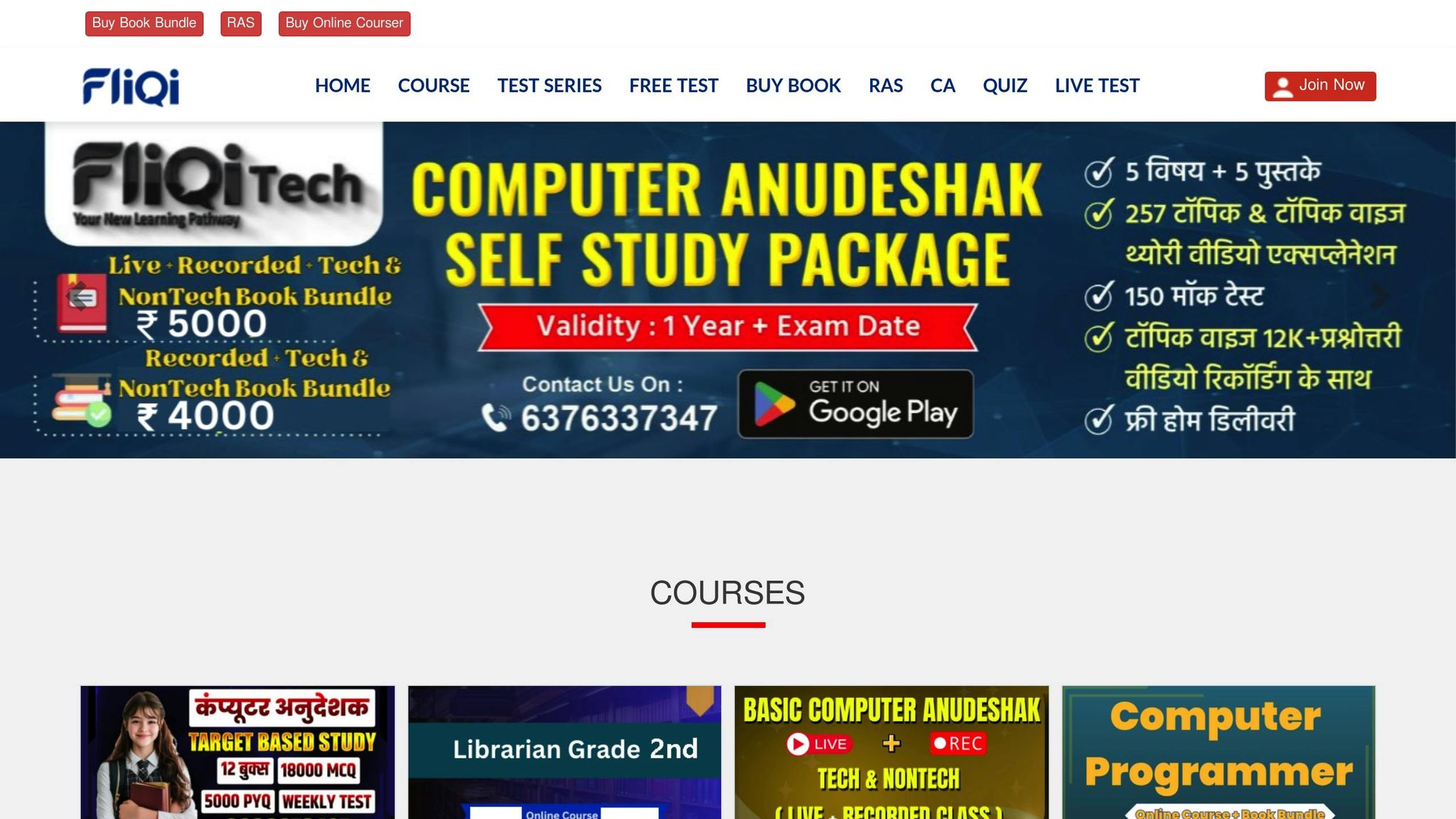
FliQi Education, an Indian education company, faced a tough hurdle: connecting with aspiring candidates in rural Rajasthan preparing for the Rajasthan Administrative Service (RAS) exams. Traditional digital marketing methods often fall short in underserved areas, so the company took a different approach. They launched a Click-to-WhatsApp campaign, reaching students on a platform they were already familiar with.
Over 3.5 months (late 2024 to early 2025), the campaign used targeted Meta ads to engage RAS-focused audiences. Instead of directing users to a website, a single tap opened a WhatsApp chat. This allowed students to ask questions, show interest, and even purchase study materials directly - cutting down on the usual conversion hurdles.
The results were impressive:
- 85% lead-to-conversion rate
- 70–80% revenue growth quarter-over-quarter
- 80% of new customers came from rural areas
- Click-to-WhatsApp ads accounted for 60% of total business during the campaign.
WhatsApp didn’t just drive leads - it became the backbone of the sales and support system. After purchasing, students received exam tips, practice materials, and updates through the app, fostering trust in areas where traditional marketing struggles to make an impact.
This campaign highlights how using familiar platforms can simplify lead generation while enhancing customer support. It’s a strategy that holds promise for other industries looking to connect with hard-to-reach audiences.
4. Dubai Realty Group's Real Estate Lead Conversion Campaign
In Dubai's bustling property market, WhatsApp has become the go-to platform for lead generation. A staggering 60% to 80% of property inquiries now begin on the app. Recognising this trend, real estate firms have shifted their strategies to align with this digital-first approach, leading to more advanced technical integrations.
To streamline operations, agencies in Dubai connected WhatsApp with CRM systems, ensuring messaging data synced automatically. They also introduced branded sender identities, replacing generic 10-digit numbers, to establish trust right from the first interaction. Agents used dedicated numbers for personalised communication, while centralised oversight ensured smooth management. Automated responses and chatbots efficiently handled common questions about property details, pricing, and availability. Meanwhile, high-quality visuals, such as images and videos, gave potential buyers a clear sense of the listings.
This strategy tackled two major challenges: reducing lead drop-offs and speeding up response times. The WhatsApp Property Hub became a one-stop solution, offering brochures, payment plans, and 24/7 AI-driven query handling. With a seamless one-click handoff to live agents, the time needed to convert leads was significantly reduced.
sbb-itb-0a82e4d
5. Tatil Tur's Travel Booking Click-to-WhatsApp Campaign
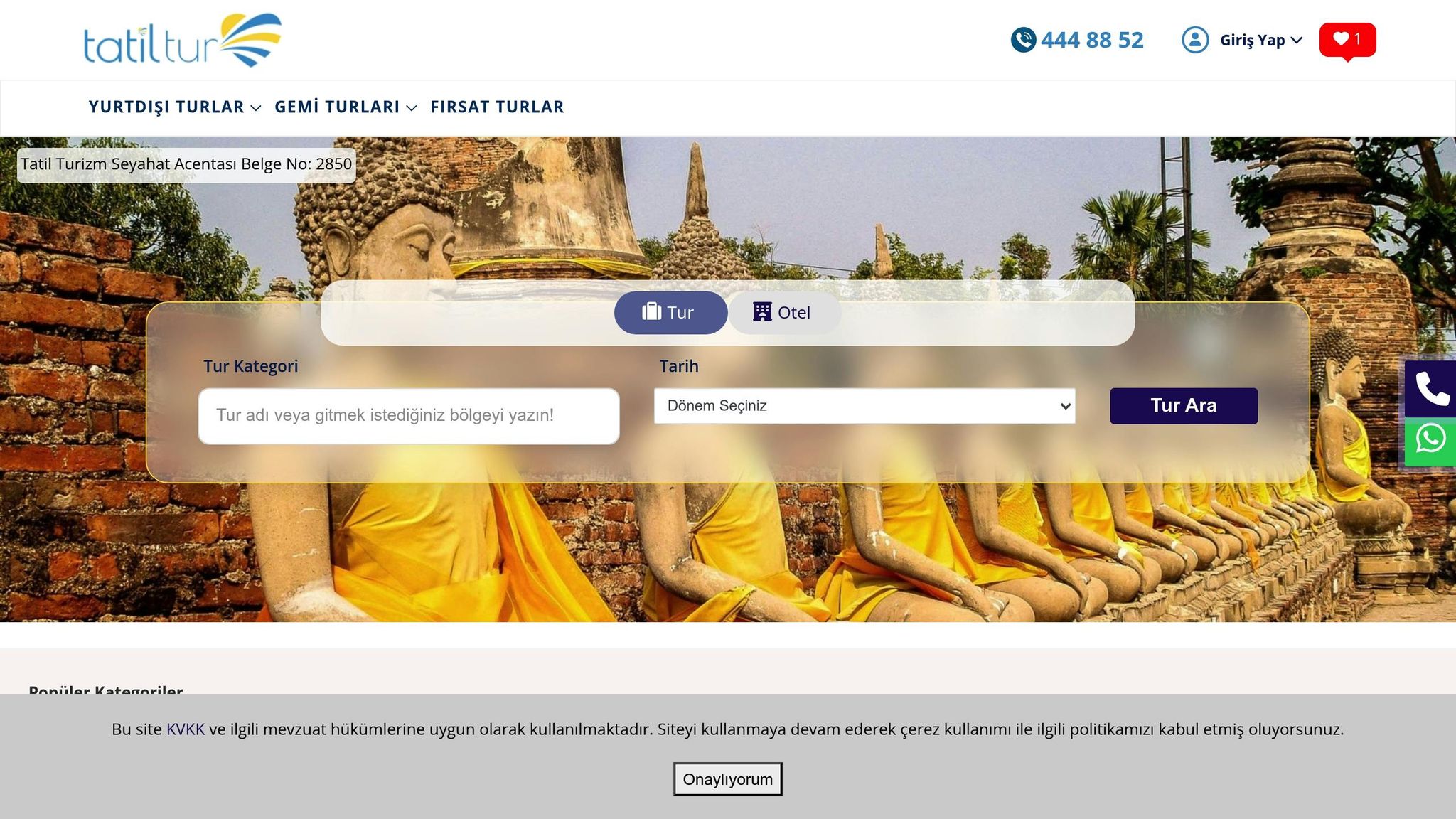
Tatil Tur simplified the travel booking process by running click-to-WhatsApp ads on Facebook and Instagram. These ads allowed customers to connect directly with live travel agents, removing the need for traditional landing pages. For those who submitted their details through lead ads, an automated system sent an initial message via WhatsApp or Instagram, ensuring every enquiry was addressed quickly and efficiently.
This strategy highlights the growing shift towards using WhatsApp for direct and personalised customer engagement across various industries.
6. Wear That's Fashion Styling Order Boost Campaign
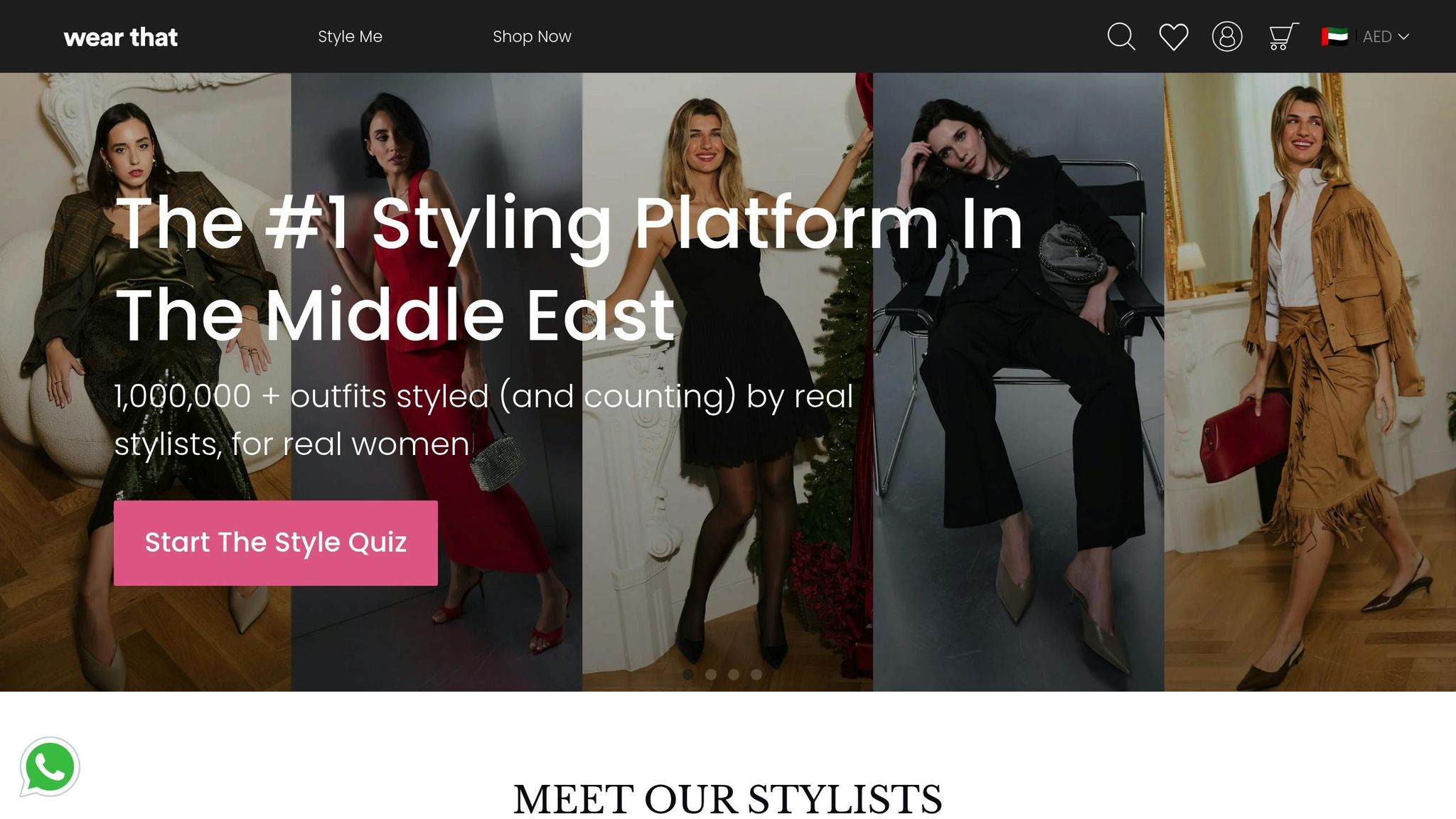
Dubai-based fashion service Wear That took its client experience to the next level by automating interactions through WhatsApp. In September 2024, the company introduced SleekFlow's WhatsApp automation, spearheaded by Retention Lead Nadia Benjelloun. This upgrade replaced their old manual onboarding process with automated flows that kick off as soon as clients complete a style quiz on the website. This move set the stage for more advanced client engagement strategies.
The campaign offered a tailored experience for clients who paid a one-time fee of AED 105 to receive a curated fashion box. Using WhatsApp, 30 stylists introduced themselves, shared personalised video selections, and discussed client preferences. To keep communication relevant, the platform automatically categorised clients into groups like "fashion enthusiasts", "time-constrained", or "help seekers", ensuring targeted broadcasts hit the mark.
To further simplify operations, Wear That integrated Zoho Inventory via webhooks. This enabled the automatic delivery of PDF invoices and real-time status updates, from box preparation to delivery. Three days after delivery, clients received a feedback survey. With these tasks automated, stylists could dedicate more time to creating the ideal fashion box for each client.
Nadia Benjelloun highlighted the impact of these changes:
"Stylists are no longer bogged down with back-and-forths for information and can now focus on curating the perfect box for each client." - Nadia Benjelloun, Retention Lead, Wear That
The results spoke for themselves: Wear That saw a 21% rise in order requests, driven by enhanced WhatsApp retargeting strategies, while keeping their 24-hour turnaround target for new sign-ups intact. The ability to send visually engaging, targeted broadcasts played a big role in boosting conversions and building stronger client relationships.
7. Using WAConversionTracking to Improve Google Ads Performance
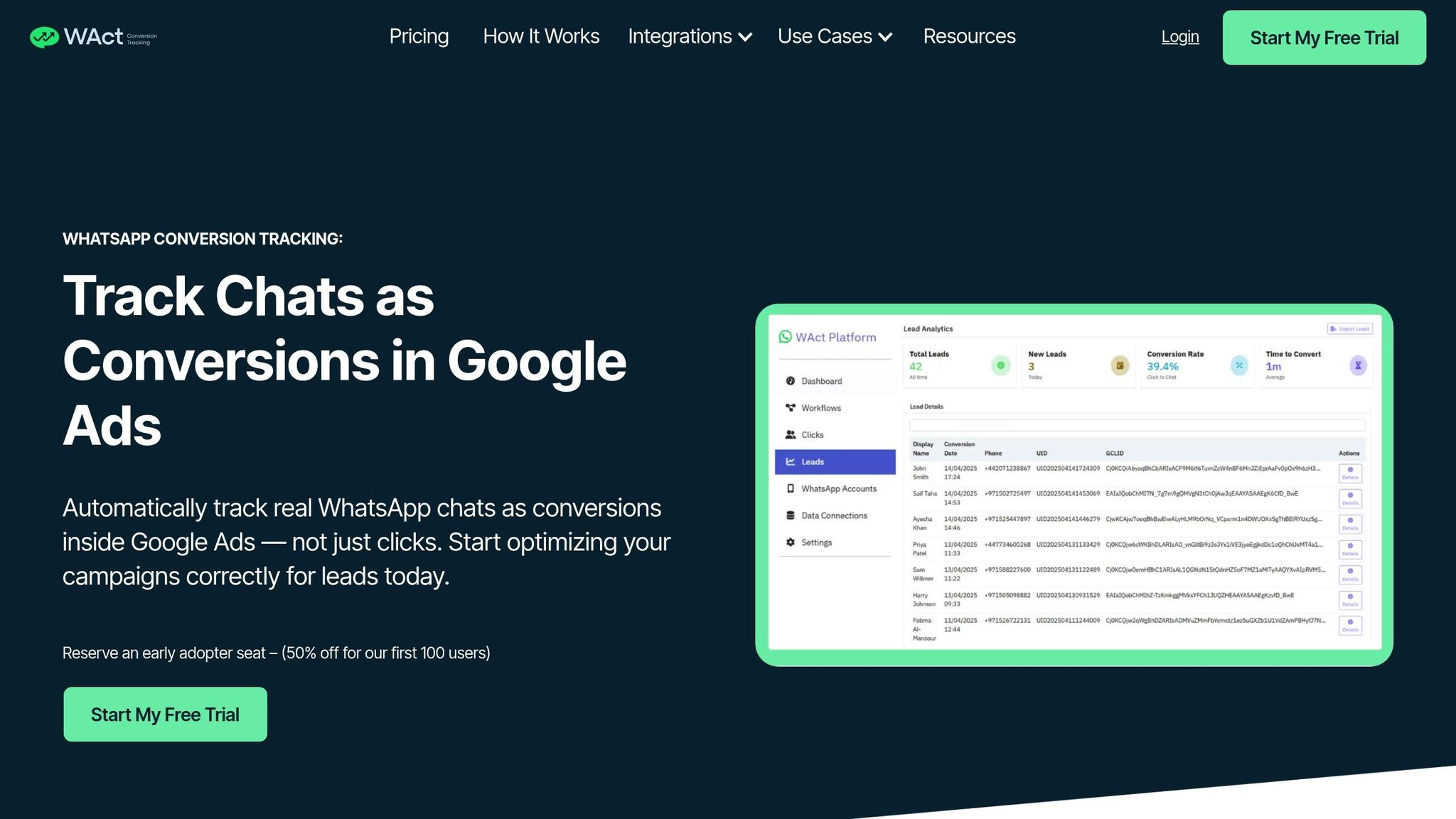
One of the challenges businesses face with Click-to-WhatsApp ads is the inability to track what happens after someone clicks the button. A click doesn’t necessarily mean a chat started, a real enquiry was made, or that the lead is legitimate. This lack of clarity often leaves campaign optimisation to guesswork.
WAConversionTracking solves this issue by capturing the Google Click ID (GCLID) and UTM parameters when a user clicks your ad. It assigns a unique reference number to the initial WhatsApp message sent by the user. When your team receives this message, the tool matches the reference number to its database, identifying the exact ad, keyword, or campaign that generated the lead. Interestingly, around 99% of users include this reference number in their sent messages, ensuring reliable tracking.
This approach allows businesses to leverage Offline Conversions in Google Ads by uploading high-quality lead data back into the platform. Instead of optimising for clicks, Google’s algorithm can be trained to focus on identifying genuine customers. Studies indicate that optimising Click-to-WhatsApp ads for purchases rather than conversations can boost sales by 28% and lower the cost per purchase by 21%.
Traditional click tracking only tells you whether someone clicked or not, without providing insight into lead quality or intent. WAConversionTracking goes further, recording GCLID, UTM parameters, and actual conversation data. This makes it possible to attribute meaningful conversions - like completed purchases or qualified leads - directly to specific ads. This is particularly valuable in the UAE, where conversational interactions play a key role in customer engagement.
What’s even better is that WAConversionTracking doesn’t require complex developer setup. It integrates effortlessly with Google Sheets and popular CRM systems, automatically sending conversion data back to Google Ads as soon as a message is received. This ensures your campaigns are guided by precise, actionable data, helping you cut unnecessary spending and scale ads targeting high-intent customers. It’s a game-changer for accurate ad performance tracking.
Campaign Comparison Table
Here's a side-by-side comparison of seven WhatsApp marketing campaigns, showcasing their strategies, key results, and standout features. Each campaign demonstrates how tailored approaches and measurable outcomes can drive success.
| Campaign | Industry | Primary Strategy | Key Results | Notable Feature |
|---|---|---|---|---|
| Max Fashion UAE | Retail Fashion | Multilingual Click-to-WhatsApp campaigns (Arabic & English) | Reduced cost per lead and boosted engagement across diverse demographics | Personalised seasonal offers in customers’ preferred languages |
| Arabian Automobiles | Automotive | Ramadan-themed test drive campaign via WhatsApp | High conversion rates during the peak Ramadan season | Tapped into Ramadan shopping habits to promote luxury car bookings |
| FliQi Education | EdTech | Rural lead generation targeting tier-2 and tier-3 cities | Expanded reach in underserved areas at lower costs | Focused on areas with limited internet access, ensuring better accessibility |
| Dubai Realty Group | Real Estate | Lead conversion through instant property enquiries | Faster responses and higher qualified lead ratios | Enabled direct communication between agents and buyers for high-value property transactions |
| Tatil Tur | Travel & Tourism | Click-to-WhatsApp booking campaigns | Increased booking conversions while lowering cost per click | Simplified booking with a conversational interface |
| Wear That | Fashion Styling | Order boost campaign with styling consultations | Higher average order value and improved customer retention | Offered personalised fashion advice that influenced purchase decisions |
| WAConversionTracking | Marketing Technology | Offline conversions tracking for Click-to-WhatsApp campaigns | Enhanced sales performance and cost optimisation through accurate tracking | Automatically tracked GCLID and UTM parameters for seamless Google Ads integration |
This table highlights how each campaign leveraged WhatsApp's features to address industry-specific goals, resulting in improved engagement, conversions, and overall efficiency.
Conclusion
WhatsApp marketing delivers results when it creates genuine conversations. Successful campaigns, like Max Fashion's multilingual strategy or Arabian Automobiles' Ramadan-focused timing, highlight the importance of addressing customer needs and ensuring effortless engagement. These examples emphasise that targeted, measurable interaction is key to achieving campaign goals.
Metrics such as open rates, click-through rates, response rates, and conversion rates are essential for identifying where customers drop off and where campaigns succeed. Without these insights, improving performance becomes a guessing game. To enhance your approach, consider integrating Click-to-WhatsApp buttons, deploying chatbots for routine queries, and involving human agents for more complex interactions. Additionally, segment your audience based on behaviour - such as past purchases, engagement frequency, or preferred language - for more personalised communication.
Tracking actual conversions on WhatsApp is equally crucial. Tools like WAConversionTracking can capture GCLID and UTM parameters, help Smart Bidding identify high-intent users, and optimise ads for purchases. This approach has been shown to boost sales by 28% while reducing the cost per purchase by 21%. To refine your strategy further, A/B test different messaging formats, timings, and calls-to-action, while keeping an eye on opt-out rates. These adjustments can help bridge the gap between generating leads and closing sales.
FAQs
How can businesses in the UAE use WhatsApp to boost customer engagement?
WhatsApp offers businesses in the UAE a way to boost customer engagement through personalised and real-time communication. With its impressive open and response rates, it enables companies to connect with customers in a way that feels both natural and immediate. For instance, businesses can send tailored messages in Arabic and English, catering to local preferences and building trust.
The platform's features, like AI-powered chatbots, can handle routine tasks such as answering FAQs, tracking orders, or scheduling appointments. This ensures customers receive instant support without delays. By integrating CRM data, businesses can personalise interactions even further - like addressing customers by name or offering recommendations based on their preferences.
In a region where trust and personal relationships are key, WhatsApp stands out as a tool that not only improves customer satisfaction but also strengthens loyalty and boosts sales.
What are the advantages of using Click-to-WhatsApp ads for generating leads?
Click-to-WhatsApp ads make it easy for potential customers to connect with businesses instantly. With just one click on an ad, users are directed to WhatsApp, ensuring a smooth and hassle-free experience. This approach is especially effective in capturing high-intent leads since those clicking are already showing interest in the product or service.
What makes these ads even more powerful is their ability to offer personalised communication. Businesses can customise their responses to suit individual preferences, making interactions more relevant and engaging. In the UAE, where WhatsApp is a staple for over 90% of the population, this method works exceptionally well for handling inquiries, providing support, or even facilitating transactions.
By bridging the gap between businesses and customers at the exact moment of interest, Click-to-WhatsApp ads not only enhance lead quality but also speed up the sales process. Plus, they benefit from WhatsApp's strong reputation as a trusted communication platform.
How can WAConversionTracking improve WhatsApp ad performance?
WAConversionTracking offers a solution for businesses looking to boost the performance of their WhatsApp ad campaigns by addressing a common pain point: tracking and attributing conversions accurately. Many marketers struggle to connect WhatsApp interactions - like messages or inquiries - to specific ad campaigns. This tool eliminates that challenge by seamlessly integrating WhatsApp with platforms such as Google and Facebook, enabling precise tracking of which ads lead to WhatsApp engagement.
With detailed attribution data, marketers can pinpoint the campaigns or creatives that generate the most meaningful interactions. This insight helps them fine-tune their ad spend, enhance ROI, and adjust marketing strategies for better results. In the UAE, where WhatsApp plays a central role in communication, WAConversionTracking becomes an essential tool for businesses aiming to maximise their marketing impact and allocate budgets more effectively.