
When running Google Ads campaigns in the UAE, both WhatsApp and chat bots offer unique advantages for post-click strategies. Here's the core takeaway:
- WhatsApp: Ideal for personalized, trust-driven interactions. It delivers high lead quality, especially for industries like real estate and healthcare. With features like Click-to-WhatsApp ads, businesses can directly engage users, secure verified phone numbers, and optimize retargeting. However, it requires live agents and can be harder to scale.
- Chat Bots: Best for handling high traffic and repetitive queries. They are cost-efficient, operate 24/7, and excel at quick lead qualification. Advanced bots can manage multilingual conversations and even complete purchases. However, poor design may frustrate users, and setup costs for sophisticated bots can be high.
Quick Comparison
| Aspect | Chat Bots | |
|---|---|---|
| Lead Quality | Strong for high-value leads | Varies by design |
| Speed | Instant, with 72-hour follow-up | 24/7 availability |
| Cost | Higher (live agents needed) | Lower (automation) |
| Scalability | Limited without API | Easily scalable |
| Tracking | Strong with tools like WAConversionTracking | Requires manual integration |
For many businesses, a hybrid approach works best: use chat bots for initial lead qualification and WhatsApp for closing high-value leads. This strategy balances efficiency with personalized engagement, ensuring better results across campaigns.

WhatsApp vs Chat Bots for Google Ads: Performance Comparison
WhatsApp in Google Ads Campaigns
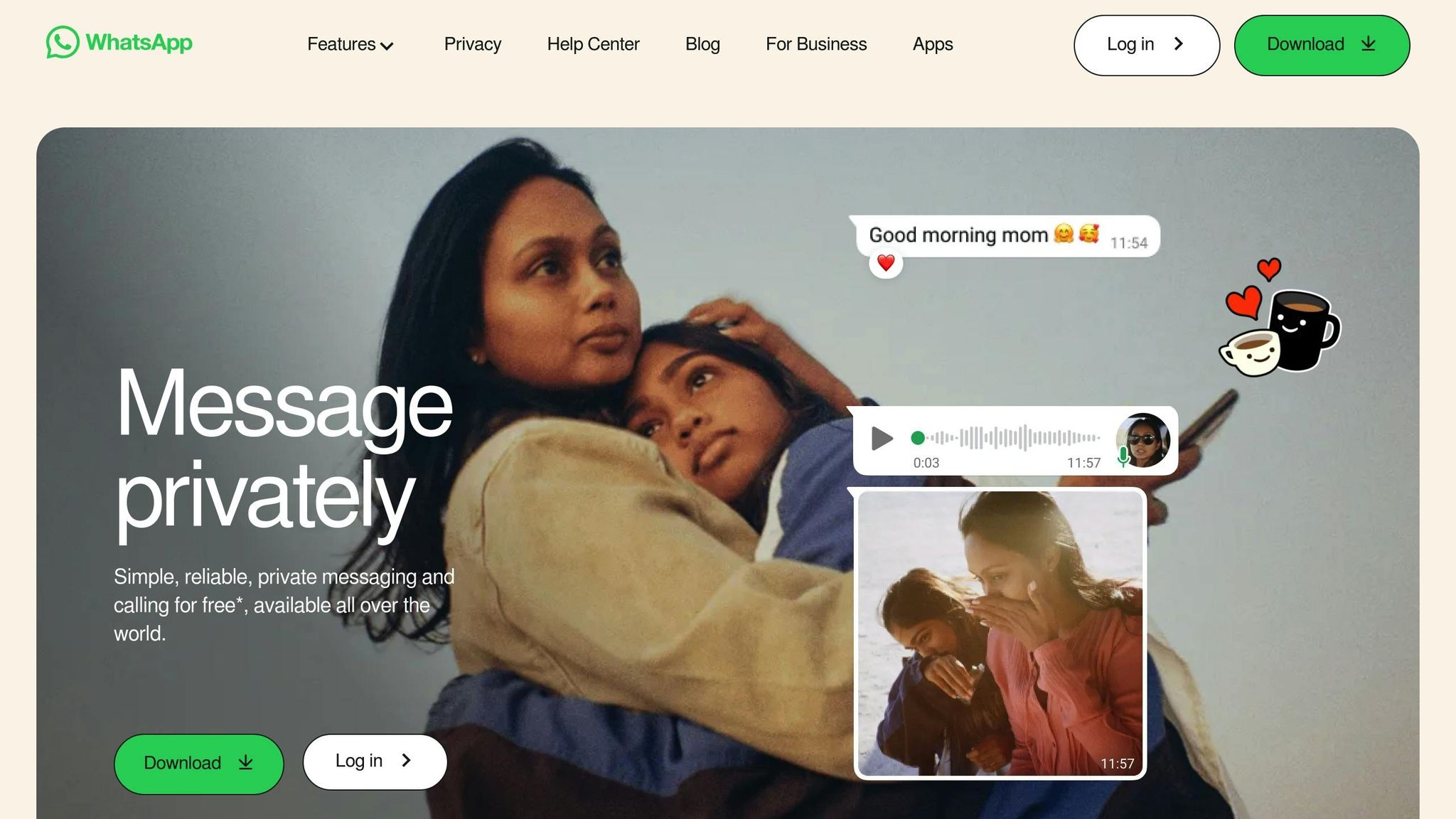
How WhatsApp Fits into the Post-Click Journey
Click-to-WhatsApp ads simplify the user journey by sending people straight to a chat, skipping forms that typically convert at a low rate of just 2%.
This strategy is especially effective in the UAE, where WhatsApp is the go-to communication tool. For instance, Arabian Automobiles Company, the exclusive distributor of Nissan in Dubai and the Northern Emirates, used click-to-WhatsApp ads to book test drives. The results? A 56% drop in cost-per-lead and double the leads compared to traditional advertising methods.
Every click captures a verified phone number, giving businesses valuable first-party data for retargeting. Plus, you get a 72-hour window to follow up or re-engage without needing the customer to opt in again. This approach not only boosts retargeting opportunities but also enhances conversion tracking and campaign optimisation.
On top of this, Google Ads now offers Message Assets (currently in beta) for Search and Performance Max campaigns.
These operational insights highlight WhatsApp's potential, but it’s worth weighing its strengths against its limitations.
Strengths and Weaknesses
One of WhatsApp's biggest advantages is the trust it fosters. In fact, 53% of customers are more likely to buy from a business they can message directly. Its mobile-friendly, conversational nature aligns perfectly with the way people in the UAE prefer to communicate.
Pre-filled messages make things even easier, instantly providing context and reducing effort. For example, Apollo 24|7, a healthcare platform, used WhatsApp for appointment bookings and saw a 49% rise in bookings alongside a 72% boost in average revenue per order.
However, scaling this approach requires quick responses - whether from humans or AI. Without prompt replies, leads can quickly lose interest. Another challenge is tracking: standard Google Ads metrics only measure clicks, not the outcomes of WhatsApp conversations. Without proper tracking solutions, you might end up optimising for clicks rather than actual conversions.
Despite these challenges, the platform's strengths shine when you examine its impact on campaign performance.
Effect on Google Ads Performance
One limitation of standard Google Ads tracking is its inability to go beyond clicks and measure actual sales or outcomes. This creates an attribution gap, making campaign optimisation harder.
WAConversionTracking bridges this gap by capturing WhatsApp conversations, including GCLID and UTM parameters, and feeding them back into Google Ads as conversions. This allows Smart Bidding to focus on real results instead of just clicks. For example, JU Productions used automated lead qualification on WhatsApp and reduced its cost per qualified lead by 47.2%.
In markets like the UAE and Saudi Arabia, businesses using click-to-WhatsApp ads report conversion rates as high as 40%, with 70% of marketers achieving up to 3x ROAS. Bowaba, a GCC-based agency, achieved up to 11x ROAS for its clients by replacing traditional forms with direct WhatsApp chats and leveraging real-time retargeting within the 72-hour follow-up window.
"WhatsApp Ads address these challenges by eliminating the need for a contact form, thereby enhancing lead capture accuracy and reducing drop-off rates." - Respond.io
Chat Bots in Google Ads Campaigns
Types of Chat Bots for Paid Traffic
Chat bots in Google Ads campaigns typically appear in two forms: as website bots integrated into landing pages or as bots on messaging platforms triggered by Message Assets [8, 15, 11].
Their functionality can range from simple rule-based systems to advanced AI-powered solutions. Rule-based bots follow fixed scripts, asking standardised questions about factors like budget, location, or intent - ideal for basic lead qualification. On the other hand, AI-driven bots handle more dynamic interactions, such as multilingual conversations or personalised product recommendations. This capability is particularly valuable in the UAE's linguistically diverse market [22, 8].
When users click on a message-enabled ad, they’re often greeted with a pre-filled starter message, which simplifies the process of initiating a conversation [15, 17]. These bots then qualify leads by asking automated questions and, for high-potential prospects, seamlessly hand them over to human agents [13, 11]. Advanced bots can even let users browse catalogues, choose product options, and complete purchases - all within the chat interface [8, 13]. These diverse implementations highlight both the benefits and the potential hurdles of using chat bots.
Strengths and Weaknesses
Chat bots bring several advantages to the table, including round-the-clock availability and instant responses, which eliminate delays and reduce operational costs [24, 13]. Speed is critical - delays of more than five minutes can significantly hurt trust and lead quality.
They excel at structured lead qualification, consistently asking the same questions to filter out high-quality leads before involving human agents. This efficiency reduces costs while improving campaign outcomes [24, 13]. For instance, Hyundai Brasil used Click-to-WhatsApp ads with a chat bot to promote their HB20 car model in August 2023. The campaign reached 3.9 million people and generated over 15,000 WhatsApp conversations. Similarly, Turkish retailer Modanisa reported that 55% of customers who interacted with their bot made their first purchase directly through the chat.
However, poorly designed bots can lead to user drop-offs. Basic bots often struggle with complex or multilingual queries - a notable challenge in the UAE, where customers frequently switch between English, Arabic, and other languages within a single conversation. If a bot cannot handle these transitions or escalate appropriately, users may abandon the interaction altogether.
Effect on Google Ads Performance
Chat bots not only streamline operations but also enhance Google Ads performance through advanced tracking capabilities. Google Ads now offers a "Leads from Messages" conversion goal, enabling unified tracking across messaging platforms. Bots can log user interactions, assign lead quality scores, and relay this data back to ad platforms using tools like Meta's Conversions API (CAPI).
For example, Automax achieved a 10% boost in conversions by using CAPI to optimise their chat-based ad campaigns. Similarly, retail brands employing AI-driven messaging strategies have reported up to 3.5× higher purchase conversions and more than 4× return on ad spend.
However, tracking the outcomes of bot conversations remains a challenge. While Google Ads can monitor clicks on message assets, measuring the actual results of these interactions is more complex than tracking standard website conversions. Tools like WAConversionTracking, which capture GCLID and UTM parameters from WhatsApp conversations, offer a solution by feeding this data back as conversions. Unfortunately, most chat bot platforms require manual integration to achieve comparable attribution accuracy [18, 11].
"It's essential to start with a clear business objective and craft a tailored workflow to reach that goal... with the precision of A/B testing, it's possible to refine your approach and secure campaign success."
– Ahmed Nassar, Technical Product Manager, respond.io
When paired with WhatsApp conversion tracking, chat bots can significantly enhance overall campaign performance in the UAE’s competitive market.
Google Ads Message Assets with WhatsApp
sbb-itb-0a82e4d
WhatsApp vs Chat Bots: Which Performs Better?
When it comes to UAE campaigns, both WhatsApp and chat bots have their strengths. Here's a closer look at how they stack up against each other.
Comparison Table
| Aspect | WhatsApp (Direct Chat) | Chat Bots (Automated) |
|---|---|---|
| Lead Quality | Higher; one-on-one engagement | Varies; depends on qualification setup |
| Speed | Instant; 72-hour follow-up window | Immediate, 24/7 availability |
| User Experience | Personal and familiar | Efficient for straightforward queries |
| Scalability | Needs API for multi-agent or bulk use | Easily handles high traffic |
| Tracking Depth | High with tools like CAPI/WAConversionTracking | Tracks every interaction step |
| Industry Fit | Ideal for high-value sectors like real estate and healthcare | Suited for e-commerce and high-volume leads |
Lead Quality and Conversion Rates
WhatsApp stands out in the UAE market for driving higher conversion rates, especially in industries like real estate, healthcare, and luxury goods. Its ability to foster trust through direct conversations makes it a strong alternative to traditional landing pages, which typically convert at a rate of 9–12%.
On the other hand, chat bots shine in high-traffic scenarios, efficiently qualifying leads around the clock. They use standardised questions about topics like budget or location to assess prospects, making them particularly effective for e-commerce and service industries with frequent inquiries. However, the quality of leads depends heavily on the bot's design and qualification logic.
For tracking, tools like WAConversionTracking allow businesses to monitor WhatsApp conversations as conversions and send AED-based values back to Google Ads. For instance, JU Productions used the Meta Conversions API (CAPI) to optimise WhatsApp ad performance, cutting the cost per qualified lead by 47.2%.
Cost, Scalability, and Operations
WhatsApp requires live agents, which increases operational costs but delivers better results for complex sales processes. The platform's 72-hour free messaging window for Click-to-WhatsApp ads allows businesses to follow up multiple times without extra fees. For UAE companies targeting high-value services, this can result in a lower cost per lead. For example, The Little Farm Co. reported a 46% increase in customer queries while reducing costs by 32% using Click-to-WhatsApp ads.
Chat bots, in contrast, are subscription-based and highly scalable. They can handle unlimited conversations simultaneously, making them cost-effective for businesses dealing with large volumes of inquiries. Automax® saw a 10% boost in conversions after implementing CAPI to track bot interactions and refine ad targeting. However, advanced bots, especially those equipped for multilingual markets like the UAE, can be expensive to set up and maintain.
When choosing between the two, businesses should balance operational costs with lead quality. WhatsApp is ideal for industries requiring personal engagement, while chat bots are better suited for managing simpler, high-volume inquiries.
Data and Attribution in Google Ads
Accurate data attribution is a key factor in evaluating these tools. WhatsApp, when paired with WAConversionTracking, captures GCLID and UTM parameters from every interaction and sends them back to Google Ads as conversions. This allows Smart Bidding algorithms to focus on high-value buyers instead of mere clicks. Bowaba, a GCC-based agency, achieved up to 11x ROAS by integrating WhatsApp-first funnels with their CRM tools.
Chat bots also provide detailed interaction tracking, documenting every step from the initial message to the final purchase. However, achieving similar attribution accuracy often requires manual integration with tools like the Meta Conversions API (CAPI) or Google Ads.
For UAE advertisers using Smart Bidding, ensuring AED-based conversion values is crucial. WAConversionTracking simplifies this process by automatically assigning values to WhatsApp chats, enabling Google Ads to optimise campaigns for revenue. This is especially important in the UAE, where 85% of consumers rely on mobile devices for product research.
Best Scenarios for Each Option
WhatsApp is best for:
- High-value services that rely on personalised communication
- B2B sales requiring direct human interaction
- Markets where WhatsApp dominates as a communication tool
Chat bots are best for:
- E-commerce businesses managing hundreds of daily inquiries
- Quick lead qualification through standardised questions
- Companies needing 24/7 availability without extra staffing
For many businesses, a hybrid approach can be the most effective. Use chat bots to handle initial lead qualification, then transfer high-intent prospects to live WhatsApp agents for closing sales. Blacklyf in Uganda adopted this strategy and saw a 60% drop in acquisition costs along with a 3x increase in conversion rates by combining bots for screening with WhatsApp for final sales conversations.
Using Both for UAE Campaigns
Decision Factors for UAE Advertisers
When planning campaigns in the UAE, decisions should factor in deal size, sales cycle, language needs, and team capacity. Let’s break it down:
- Deal size: For industries like real estate, automotive, or healthcare, where transactions often involve high-value assets (like AED 2 million villas), human agents are essential for consultative selling. However, chatbots can step in first to qualify leads and handle basic screening.
- Sales cycle: Longer, more complex sales processes - such as B2B services requiring weeks of deliberation - benefit from human relationship-building. In contrast, simpler e-commerce transactions are well-suited for full automation.
- Language needs: The UAE's multicultural market demands flexibility. With advanced AI supporting over 90 languages, businesses can seamlessly cater to Arabic, English, Hindi, and other widely spoken languages.
- Team capacity: If staff resources are limited, chatbots ensure 24/7 engagement, keeping leads warm and active even after hours.
Additionally, the UAE’s tech-savvy population and widespread use of WhatsApp as the go-to messaging app make this market ideal for conversational commerce. With 80% of consumers more inclined to buy from brands offering personalised interactions, the right strategy can directly influence your revenue. For many advertisers, this makes a hybrid approach the most effective solution.
Hybrid Approach
A hybrid strategy combines the strengths of both WhatsApp and chatbots, offering the best of both worlds. Many UAE businesses are already leveraging this approach to maximise results.
Here’s how it works: start with a chatbot to address FAQs, gather zero-party data (like preferences, budgets, and intent), and pre-qualify leads through standardised questions. Once a prospect is identified as high-value, they’re seamlessly escalated to live WhatsApp agents for personalised follow-up and closing conversations.
Some real-world examples highlight how this approach delivers:
- Hyundai Brasil: Their automotive campaign used click-to-WhatsApp ads to connect users with a chatbot assistant. This strategy reached 3.9 million people and sparked over 15,000 WhatsApp conversations, delivering instant answers to vehicle-related questions.
- Arha Media’s Aha platform: By integrating the WhatsApp Business API with their CRM, they personalised campaigns for 3–4 million users monthly. The result? A 38% read rate and over 10,000 users completing transactions directly within the chat.
For tracking and optimisation, tools like WAConversionTracking can capture GCLID and UTM parameters from both chatbot and human interactions. These metrics are then fed back to Google Ads as conversions, complete with AED values. This allows Smart Bidding to prioritise campaigns that generate actual revenue rather than just clicks. By integrating WhatsApp Business API with your CRM and using Meta Conversions API (CAPI), you can flag high-value conversations, ensuring your budget targets buyers with serious intent. This closed-loop system helps focus your ad spend where it matters most - on driving meaningful results.
Conclusion
Combining WhatsApp with chatbots can significantly enhance Google Ads performance in the UAE. WhatsApp is particularly effective for building trust and driving high-intent conversions, especially in industries like real estate and automotive, where transactions tend to be complex and high-value.
Chatbots, on the other hand, offer a scalable way to streamline operations. They’re perfect for handling repetitive questions and qualifying leads 24/7. This makes them invaluable for businesses that deal with a high volume of simple enquiries, ensuring quick responses that reduce the chances of abandoned carts. Together, WhatsApp and chatbots create a powerful synergy, improving both efficiency and the quality of conversions.
For advertisers in the UAE, tracking WhatsApp conversations as conversions is a must. Tools like WAConversionTracking allow businesses to capture GCLID and UTM data, feeding it directly into Google Ads. This helps Smart Bidding focus on campaigns that actually drive revenue, rather than just clicks. By implementing accurate attribution, businesses can achieve lower costs and better campaign performance overall.
FAQs
What is the best way to combine WhatsApp and chatbots for better Google Ads results?
To get the most out of Google Ads, businesses can pair the WhatsApp message asset with a chatbot to create a smooth, efficient customer experience. With the WhatsApp extension in Google Ads, users can click directly into a chat with your brand, offering immediate engagement and generating high-quality leads. Once in the chat, an automated bot can greet users, qualify leads, gather details like their name and product preferences, and even suggest offers - all without needing a human agent.
This method minimises drop-offs, removes the need for a landing page, and ensures uninterrupted communication. To set it up, link your verified WhatsApp Business account to your Google Ads campaign, connect it to a pre-configured chatbot, and use tools like WAConversionTracking to monitor leads and conversions. For businesses in the UAE, this strategy enables personalised, 24/7 interactions, improves the quality of leads, and provides a clear way to measure ROI in AED.
What challenges do marketers face when tracking WhatsApp and chatbot conversions in Google Ads?
The key issue with Google Ads is its lack of a built-in conversion-tracking system for WhatsApp or chatbot interactions. While you can track when someone clicks a "Message on WhatsApp" button, that's where the data stops. It doesn’t tell you if they initiated a conversation, who they are, or if the interaction resulted in a qualified lead.
This limitation creates several challenges for advertisers:
- Identifying which keywords or campaigns are actually driving WhatsApp or chatbot leads becomes impossible, leaving you to rely solely on surface-level metrics like clicks and impressions.
- Leveraging conversion-focused bidding strategies, such as Maximise Conversions or Target CPA/ROAS, is out of reach, making it harder to optimise campaigns effectively or calculate a precise ROI.
- Automating offline conversion uploads is not an option, as tracking often requires manual work or expensive third-party tools, which can be both time-consuming and prone to errors.
Because of these obstacles, many marketers are left with limited options: they either track button clicks alone or turn to manual processes or costly solutions, which can compromise accuracy and hinder the scalability of WhatsApp or chatbot-driven campaigns.
Which industries see better results with WhatsApp compared to chatbots in Google Ads?
WhatsApp works exceptionally well in relationship-focused industries where personal interaction is essential. Take luxury real estate in Dubai as an example: one client achieved an impressive 35.5% conversion rate using WhatsApp call-to-action ads - far outperforming traditional lead forms. Why? Because buyers in the UAE place a high value on instant, direct communication, with a staggering 94% of them using WhatsApp daily. This makes it a perfect fit for industries like premium automotive sales, private banking, and other high-value services where trust and quick client qualification are top priorities.
Meanwhile, chatbots shine in high-volume industries that need to manage routine inquiries efficiently. They’re ideal for sectors such as e-commerce, food delivery, telecom, and mass-market banking. Chatbots offer round-the-clock availability, instant responses, and a cost-effective way to scale operations. These automated tools ensure businesses can handle large volumes of interactions while still meeting the fast-paced expectations of WhatsApp users.