
WhatsApp is changing the way businesses in the UAE run Google Ads campaigns. With 98% message open rates and 66% of consumers preferring direct messaging with brands, integrating WhatsApp into your ads can lead to better customer engagement and higher conversions. Here’s a quick summary of the top strategies:
- Click-to-WhatsApp Ads: Drive instant conversations from ads, avoiding traditional landing pages.
- Smart Bidding on Chat Data: Focus on real interactions by tracking messages, not just clicks.
- Offline Conversion Imports: Link WhatsApp chats to actual sales for precise ad targeting.
- Retargeting with Chat Metadata: Use WhatsApp chat insights to refine ad campaigns.
- Multi-Channel Reporting: Combine WhatsApp data with Google Ads and CRM for a complete performance view.
From generating leads to closing sales, WhatsApp bridges the gap between ad clicks and meaningful customer interactions, making it a must-have tool for businesses in the UAE.
1. Use Click-to-WhatsApp Ads for Top-of-Funnel Awareness
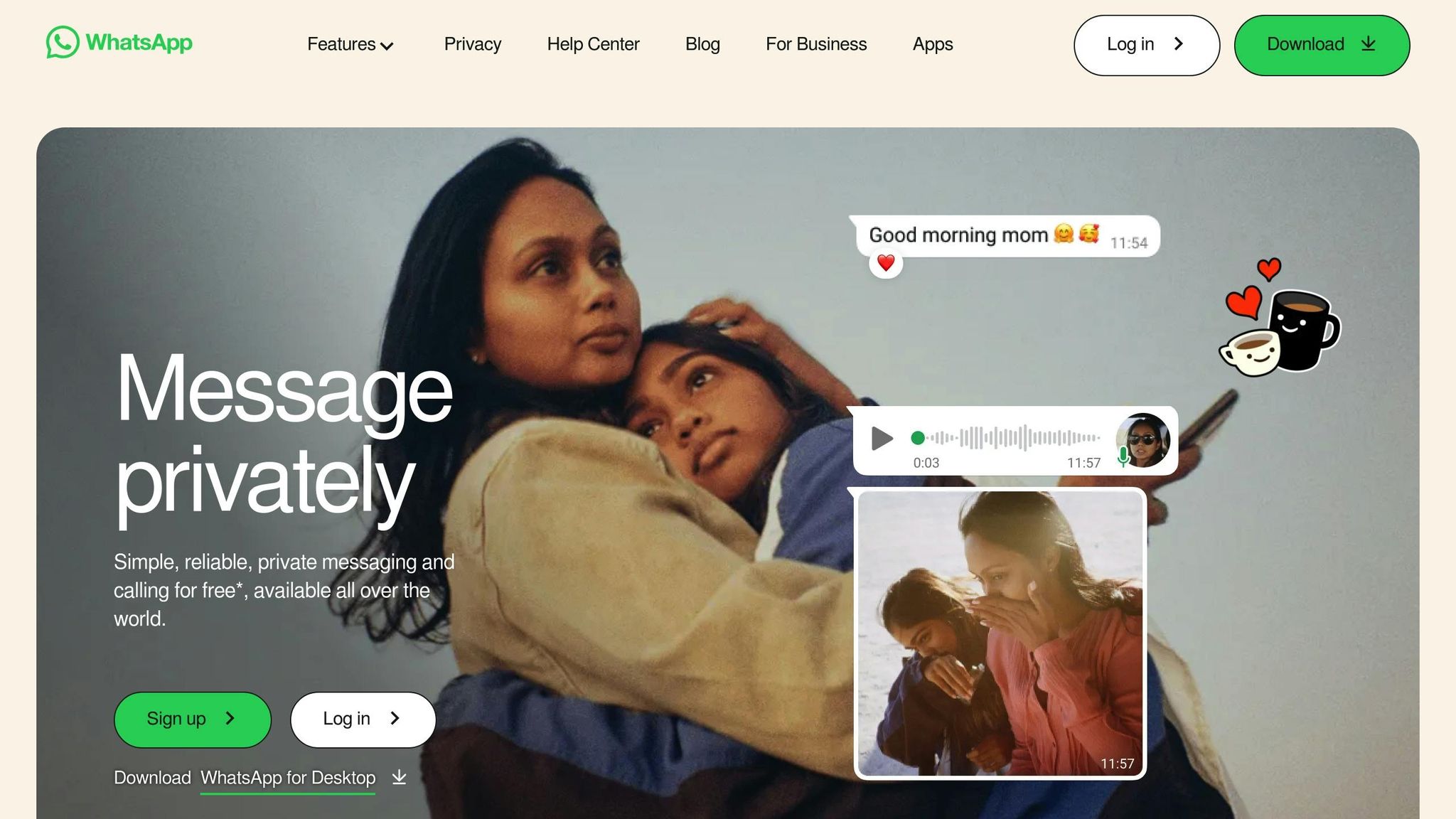
Click-to-WhatsApp ads are a game-changer when it comes to starting conversations with potential customers. Instead of redirecting users to landing pages or lengthy forms, these ads open a direct chat in WhatsApp with a single click. This approach works especially well in the UAE, where Google's WhatsApp Message Assets are available for Android users - and for iOS in certain markets. For top-of-funnel campaigns, this instant connection helps create a stronger bond with your audience. Plus, Google Ads makes it simple to integrate WhatsApp into your strategy.
Here’s how it works: In Google Ads, you can add WhatsApp as a Message Asset in both Search and Performance Max campaigns. This means when someone searches for your product or service, your ad can include a WhatsApp button alongside your website link. On Facebook and Instagram, you can set "Messaging Apps" as the conversion location to drive users directly into WhatsApp chats. To maximise reach, select the "Awareness" campaign objective, ensuring your message is seen by as many people as possible.
The effectiveness of this strategy is evident in real-world examples. Hyundai Brasil used Click-to-WhatsApp ads to promote the HB20 model, reaching 3.9 million people and generating over 15,000 WhatsApp conversations. Similarly, The Little Farm Co. achieved a 46% jump in customer queries while reducing costs by 32%.
"WhatsApp - with 2 billion users worldwide - is where those conversations happen. Meta knows this. That's why they've made it ridiculously easy to drive traffic from Facebook and Instagram ads directly into WhatsApp chats."
- Manolo Alvarez, CGO, Reach Tools
Another major perk? The 72-hour free conversation window. During this time, you can engage with users and nurture their interest without any additional messaging costs. To get the most out of this window, consider using chatbots to handle initial inquiries. Quick responses matter - engaging with users within 5 minutes can lead to conversion rates that are three to four times higher.
2. Qualify Mid-Funnel Leads with Smart Bidding on Chat Data
When moving from top-funnel strategies to mid-funnel tracking, it’s important to focus on real user interactions. Simply counting "WhatsApp button clicks" won’t tell you if users actually messaged or engaged meaningfully. To make the most of Google's Smart Bidding algorithms, you need to track actual chat interactions - not just clicks. The ideal flow to monitor should include: Button Click → Message Sent → Qualified Lead → Conversion. By importing these events into Google Ads as conversion actions, bidding strategies like Target CPA can learn to identify and target users who are more likely to engage in valuable conversations. This approach not only improves targeting but also provides actionable insights.
For example, JU Productions saw a 47.2% reduction in cost per qualified lead by using a Conversions API to track post-chat actions. Similarly, Automax® achieved a 10% increase in conversions by integrating chat data to focus on high-intent users.
"By combining Google Ads + WhatsApp + GA4 tracking, brands can map the entire user journey - from ad click to chat to conversion - allowing for smarter retargeting and lower acquisition costs." - Mercado Global Media
Tools like WAConversionTracking simplify this process by capturing the Google Click ID (gclid) at the moment of the ad click and linking it to key in-chat milestones, such as email submissions or demo bookings. These qualified events are then automatically uploaded to Google Ads. To optimise performance, Google recommends tracking at least 30 conversions per month.
3. Scale Bottom-Funnel Campaigns with Offline Conversion Imports
To make bottom-funnel campaigns more effective, it's essential to integrate confirmed purchase data using Offline Conversion Imports (OCI). This allows Smart Bidding to focus on targeting actual purchasers and high-quality leads, setting the stage for precise value-based bidding.
Here’s how it works: When a user clicks on an ad and is directed to WhatsApp, the Google Click ID (GCLID) is captured. If that user makes a purchase or qualifies as a lead, the related conversion event is uploaded back to Google Ads using the same GCLID. To comply with privacy standards, user data like emails and phone numbers should be standardised and hashed. This method, known as Enhanced Conversions for Leads, improves data matching accuracy and ensures proper attribution of sales. To avoid duplicate counts, including an order_id is recommended, and batching conversion uploads can enhance efficiency and diagnostics.
Take the example of Modanisa, a Turkish online fashion retailer, which introduced a WhatsApp chatbot in August 2023. The chatbot guided users through transactions, and 55% of engaged customers placed their first order via WhatsApp. This kind of closed-loop tracking - from ad click to purchase - is made possible through offline conversion uploads.
Once you’ve established consistent conversion data imports, you can move on to value-based bidding strategies like Target ROAS. Tools such as WAConversionTracking can simplify this process by automatically capturing the GCLID at the ad click and uploading conversion events seamlessly.
4. Build Retargeting Sequences from WhatsApp Metadata
Retargeting takes on a whole new level when you leverage WhatsApp conversation metadata. Instead of relying solely on basic click tracking, you can use high-intent signals like chat topics and user behaviour to craft precise retargeting sequences.
Start by categorising leads based on their chat activity. For instance, assign lifecycle stages such as "New Lead", "Hot Lead", "Payment", or "Customer" depending on how far along they are in the conversation. This segmentation allows you to tailor your ad messaging - showing educational content to new leads while pushing conversion-focused offers to those closer to making a purchase. Automatically syncing this metadata ensures accurate audience segmentation and sharper targeting.
Another key asset? Zero-party data - information users voluntarily share in chats. For example, if someone mentions their budget, preferred product category, or specific needs, you gain direct insight into their buying intent. Combine this data with lifecycle stages to build highly targeted Customer Match audiences in Google Ads. Let’s say a user inquires about "RO water filters" in WhatsApp; you can retarget them with ads showcasing that exact product line.
Don’t overlook users who engaged in chats but didn’t convert - they’re prime candidates for retargeting.
"By combining Google Ads + WhatsApp + GA4 tracking, brands can map the entire user journey - from ad click to chat to conversion - allowing for smarter retargeting and lower acquisition costs."
– Mercado Global Media
The secret sauce lies in integration. Sync WhatsApp interactions with your CRM or Google Analytics 4 to track the complete journey - from the initial ad click to the chat and, ultimately, the purchase. This seamless visibility not only helps you retarget users who showed interest but also ensures you exclude those who’ve already converted, saving time and resources.
sbb-itb-0a82e4d
5. Add WhatsApp Data to Multi-Channel Reporting Dashboards
Keeping data in silos makes it nearly impossible to understand your customers' full journey. If WhatsApp conversion data is isolated from your Google Ads, GA4, and CRM metrics, you're essentially operating without a complete picture. The fix? Centralised dashboards that bring all your channels together in one place.
By integrating WhatsApp conversion tracking into a centralised reporting system, you can gain a more comprehensive view of your marketing funnel. Begin by connecting WhatsApp interactions to Google Analytics 4. This step helps uncover how messaging, web traffic, email campaigns, and paid channels work together. You might notice patterns like users clicking on an ad, browsing your site, and then converting through WhatsApp - insights that traditional tracking often misses. To ensure accurate attribution, use Offline Conversion Imports to sync chat-based sales from your CRM or WhatsApp Business API. This process ties final purchases back to the original ad click, providing precise ROAS calculations instead of relying on estimates. Then, integrate these insights with advanced analytics tools to map out the full customer journey.
Google BigQuery can act as your central data hub, consolidating metrics from various sources. Automate the process of linking Google Click IDs (GCLID) to key in-chat conversions like booked appointments or completed purchases. This eliminates manual data entry and ensures every conversion is credited to the right campaign.
Go beyond basic metrics. Track the click-to-message gap (the 20–30% of users who open WhatsApp but don’t send a message), conversation-to-qualified-lead rates, and lead-to-sale conversion rates. For instance, in 2024, JU Productions used respond.io's Meta Conversions API integration to sync WhatsApp ad performance with their dashboard. This approach reduced their cost per qualified lead by 47.2%. Similarly, Automax® linked WhatsApp conversations to sales data using the Conversions API, leading to a 10% boost in overall conversions. These metrics offer a clearer view of campaign performance.
With all your channels reporting to a single dashboard, you gain clarity. You’ll be able to compare which platforms deliver the best-quality leads, make smarter budget decisions, and finally answer the question: "Which ad led to that AED 5,000 sale?"
Comparison Table

Top-Funnel vs Bottom-Funnel WhatsApp Strategies for UAE Google Ads
When considering WhatsApp strategies in the UAE, it's important to weigh the trade-offs between top-funnel and bottom-funnel approaches. Each serves a distinct purpose within the marketing funnel, and understanding their differences can help you make informed decisions.
Top-funnel campaigns focus on generating Messaging Conversations Started as the main metric. The aim is to attract as many users as possible to your WhatsApp channel. These campaigns typically achieve higher click-through rates (CTR) because of their broad targeting approach. With a cost per lead ranging from AED 10–40 - based on the UAE's average CPC range of AED 3.50 to AED 15 - this strategy is cost-effective for quickly building a database. Another benefit is the ability to leverage WhatsApp's 72-hour free messaging window for follow-ups. However, the trade-off is volume: while you’ll gain a large number of leads, many may have low purchasing intent, requiring strong qualification systems to sift through them.
Bottom-funnel campaigns, on the other hand, target users with high intent, such as those looking to book property viewings in Abu Dhabi or test drives in Dubai. These campaigns have a lower CTR due to their highly specific audience targeting, but their cost per lead is significantly higher - ranging from AED 50–150+ - as these leads are more likely to convert into customers. This approach is ideal for influencing decisions at critical moments. That said, implementing this strategy requires more effort, including offline conversion imports, CRM integration, or tools like WAConversionTracking to accurately attribute sales to your campaign efforts.
The table below highlights the key differences between these strategies:
| Metric/Feature | Top-Funnel Strategy | Bottom-Funnel Strategy |
|---|---|---|
| Primary Goal | Awareness & Initial Engagement | Lead Qualification & Sales |
| Key Metric | Messaging Conversations Started | Cost per Qualified Lead / ROAS |
| Typical CTR | Higher (broad appeal, low friction) | Lower (specific high-intent targeting) |
| Cost per Lead | AED 10–40 | AED 50–150+ |
| Advantages | Builds contact database quickly; allows immediate follow-ups | High purchase intent; effective at critical decision points |
| Disadvantages | High volume of unqualified leads | Requires extensive qualification and technical setup |
| UAE Use Case | Brand awareness for retail launches in Dubai | Booking test drives (automotive) or property viewings in Abu Dhabi |
This comparison provides a clear framework for selecting the right WhatsApp strategy, depending on your campaign goals and target audience.
"The gap between clicks and actual messages can be 20–30% or higher. You need to know this number for your campaigns." - Manolo Alvarez, CGO, Reach Tools
Conclusion
WhatsApp offers UAE businesses a powerful way to connect Google Ads clicks with real customer conversations. The strategies discussed - ranging from top-funnel awareness campaigns to mid-funnel qualification with Smart Bidding, bottom-funnel scaling through offline conversion imports, retargeting sequences, and multi-channel reporting - work together to refine your ad funnel. But the true game-changer lies in accurate conversion tracking.
Tracking conversions accurately is no small feat. Without it, you risk focusing on clicks rather than meaningful sales interactions. As Manolo Alvarez, CGO of Reach Tools, wisely states:
"The numbers never lie, but they don't always tell you what you think they're telling you".
To tackle this, advanced tools simplify the process. For instance, WAConversionTracking captures actual WhatsApp chats - complete with GCLID and UTM parameters - and feeds this data back to Google Ads. This ensures Smart Bidding gets the precise signals it needs to target high-intent users, cut down on wasted ad spend, and boost ROAS, removing the guesswork from ad performance.
Whether you're scheduling property tours in Abu Dhabi or rolling out retail campaigns in Dubai, integrating Google Ads with WhatsApp tracking gives you a clear and complete picture of your marketing funnel.
FAQs
How can Click-to-WhatsApp ads enhance customer engagement in Google Ads campaigns?
Click-to-WhatsApp ads turn Google Ads clicks into instant, one-on-one conversations on WhatsApp, a platform that’s part of everyday life for many users. Instead of directing users to a landing page, these ads open a chat instantly, making it easier for potential customers to connect in real time.
With WhatsApp boasting an impressive 98% message open rate, users are more inclined to engage, ask questions, and interact directly. This direct approach removes unnecessary steps, builds trust, and gives customers the chance to inquire about products, request information, or even make purchases on the spot. The outcome? Better-quality leads, stronger conversions, and a customer experience that aligns perfectly with the fast-paced lifestyle of UAE consumers.
How can Smart Bidding use WhatsApp chat data to improve ad targeting?
At the moment, there isn't any information about Smart Bidding directly using WhatsApp chat data for ad targeting. However, if you have any insights or resources regarding how signals from chats could be utilised, feel free to share them. We’d be happy to provide more specific details or assistance based on that information!
What are the benefits of using WhatsApp data in your Google Ads campaign analysis?
Integrating WhatsApp interaction data into your multi-channel reporting provides a more complete picture of how your campaigns are performing. By incorporating WhatsApp chats initiated through Google Ads Message Assets, you can track high-intent leads and log them as conversions alongside clicks and site visits. This way, your analysis captures both early-stage interest and actual sales.
Here’s why this matters:
- Better engagement insights: WhatsApp messages typically have high read rates and strong sales potential. This makes it easier to pinpoint which channels are driving the most qualified leads.
- Precise attribution: By feeding WhatsApp data into tools like GA4 or your CRM, you can accurately track metrics like revenue, cost-per-lead, and ROI throughout the customer journey.
- Quick adjustments: Real-time feedback from chat interactions lets you spot trends - like a spike in product inquiries - early, so you can tweak your campaigns for improved results.
By treating WhatsApp as a measurable touchpoint, you can fine-tune your ad strategy and get the most out of your campaign’s ROI.