WhatsApp marketing in the UAE is incredibly effective, with 98% open rates and response times averaging 90 seconds. Businesses using WhatsApp report 20%-60% conversion rates, making it a top channel for customer engagement. To succeed, focus on:
- Getting clear opt-in consent: Always ensure users agree to receive messages.
- Segmenting your audience: Divide customers by language, location, or behavior for tailored messaging.
- Writing short, focused messages: Keep it concise, with clear benefits and one call-to-action.
- Using rich media and interactive buttons: Add images, videos, and quick-reply options to boost engagement.
- Timing messages smartly: Send during peak hours like mid-morning or evening for higher response rates.
- Personalizing content: Use customer names, purchase history, and preferences to make messages relevant.
Track results using tools like WAConversionTracking to measure performance and optimize campaigns. WhatsApp’s ability to connect directly with customers makes it a powerful tool for businesses in the UAE.

WhatsApp Marketing Statistics and Best Practices for UAE Businesses
WhatsApp Marketing Guide for Business 2026: 8 Proven Strategies for Growth #whatsappmarketing
Get Clear Opt-In Consent Before Messaging
Before reaching out to customers, it's essential to obtain their explicit consent. This isn't just good practice - it’s a requirement under the Personal Data Protection Law (Federal Decree-Law No. 45/2021) and the TDRA's Unsolicited Electronic Communications Policy.
WhatsApp’s own policies also emphasise this. You must clearly inform users of your business name and explain that they are agreeing to receive messages via WhatsApp. For website opt-ins, include an unchecked checkbox featuring the WhatsApp logo alongside an editable phone number field.
By prioritising consent, you build trust with UAE audiences who appreciate open and straightforward communication. A well-structured opt-in process doesn’t just encourage engagement; it also reduces the chances of users blocking or reporting your account. This in turn safeguards your account’s quality rating and ensures uninterrupted messaging capabilities.
How to Collect Consent
There are several effective ways to gather consent while complying with UAE regulations:
- Use checkboxes on checkout or sign-up pages, ensuring they are not pre-selected, as required by the UAE PDPL. For logged-in users, pre-filling the phone number field can make the process smoother.
- Incorporate QR codes on product packaging or in-store displays, as well as click-to-WhatsApp ads, to encourage initial contact. Once they engage, send a short welcome message to confirm their consent.
- Offer bilingual opt-in flows in both English and Arabic to accommodate the UAE's diverse population. Additionally, provide separate options for transactional updates (e.g., order confirmations) and promotional messages (e.g., special offers).
Provide Easy Opt-Out Options
After implementing solid opt-in practices, it’s equally important to give users a simple way to opt out. Every message you send should include a clear unsubscribe option. For example, you could add instructions like "Reply STOP to opt out" or use WhatsApp’s interactive buttons for one-tap unsubscribing.
When a customer opts out, act immediately. Remove them from your marketing lists, whether they make their request via WhatsApp, your website, or through customer service. Promptly processing these requests not only helps you maintain a positive quality rating but also ensures compliance with UAE regulations. Keep secure, timestamped records of all opt-out requests to demonstrate compliance if needed.
Segment Your Audience for Better Targeting
Once you've obtained consent, the next step is to divide your audience into specific groups. In the UAE's diverse and highly connected market - where nearly 99% of people are online and WhatsApp is a preferred communication tool across various nationalities, languages, and preferences - sending a one-size-fits-all message just doesn't cut it.
By segmenting your audience, you can ensure that your messages align with the unique needs of each group. Regional case studies highlight how segmented WhatsApp campaigns can deliver significant results, such as doubling click-through rates and achieving impressive ROI. In fact, conversion rates can soar by over 200% with proper segmentation. Personalised recommendations have been shown to influence 92% of shoppers to make a purchase, while WhatsApp campaigns often achieve conversion rates ranging from 20% to 60%.
When you combine strong consent practices with precise segmentation, you can remain compliant while delivering relevant messages to the UAE's diverse audience. Here’s how to effectively segment your audience in this unique market.
How to Segment Your Audience
Start by categorising customers based on their purchase history and behaviour. For example, create segments for VIP customers, frequent buyers, new subscribers, or high-intent shoppers who have abandoned their carts. Each of these groups has distinct preferences and behaviours, so tailor your offers and messages to resonate with their specific needs.
Geographic segmentation is another powerful tool in the UAE. You can target customers by emirate - such as Dubai, Abu Dhabi, or Sharjah - to offer location-specific promotions or delivery updates. This approach adds a personal touch to your messages, making them more relevant and actionable.
Language and cultural preferences also play a crucial role. Given the UAE's bilingual population, segmenting by language (Arabic or English) and even by dialect can make a big difference. For instance, Gulf Arabic can feel more relatable to some audiences than Modern Standard Arabic. Instead of cramming everything into a single bilingual message, consider creating separate, targeted segments.
You can also leverage event-based segmentation to align with key occasions. For example, send Ramadan offers during the holy month, Eid greetings during celebrations, or National Day promotions on 2nd December. These messages show that you understand and respect your audience's values and traditions.
Dynamic segmentation takes things a step further by updating groups automatically based on customer actions. If someone clicks on a message about trainers or browses a specific category, they can be added to a relevant segment for follow-up offers. By integrating with your CRM and using clear tags, you can refine your targeting and ensure timely, relevant communication.
Why Personalisation Increases Conversions
Segmentation lays the groundwork for personalisation, which is key to boosting conversion rates. A great example comes from Tata CLiQ, which used the WhatsApp Business Platform to send personalised notifications in October 2021. Their efforts resulted in a 57% click-through rate - well above industry norms. Customers who arrived via WhatsApp were 1.7 times more likely to make a purchase, generating US$500,000 in sales within a single month and achieving an ROI 10 times higher than traditional channels like email and SMS.
Amit Kumar, Customer Retention Manager at Tata CLiQ, explained:
"Our customers had a clear preference for WhatsApp, which averaged a 57 per cent clickthrough rate. Customers who visited our website from a WhatsApp notification were 1.7 times more likely to make a purchase."
Beyond immediate sales, personalised interactions on WhatsApp lead to a 17% higher session start rate, and marketing on the platform can drive up to 89% higher purchases per user compared to other channels. Whether it’s back-in-stock alerts or exclusive discounts for abandoned carts, personalised messages not only improve conversions but also build trust and loyalty - something generic campaigns simply can't achieve.
Additionally, segmentation safeguards your account health. Sending mass messages to uninterested recipients can lead to spam reports, which may result in account suspension. On the other hand, targeted, value-driven messages maintain high-quality ratings, ensuring your account remains in good standing.
Write Short, Value-Focused Messages
Once you've segmented your audience, the next step is to create messages that directly address their specific needs. In today’s fast-paced world, customers expect quick, efficient communication. This means you have only a few seconds to grab their attention and motivate them to act. The secret? Keep your messages short, engaging, and focused on what matters most to your audience.
With the average attention span now estimated at just 8.25 seconds, every word has to earn its place. Your message should deliver value immediately - don’t bury the important details under long introductions. Whether you’re communicating in English or Arabic, brevity paired with clear benefits will always outperform drawn-out explanations.
Keep Messages Short and Conversational
Stick to 3–5 concise lines or a maximum of 7 bullet points. This ensures your entire message fits on a single mobile screen without requiring a scroll. It’s not about cramming in information; it’s about respecting your audience’s time and making your message easy to absorb at a glance.
Speak directly to your customer. Avoid generic, formal language like "We are pleased to inform you of an exclusive promotional opportunity." Instead, try something like, "Your favourite trainers are back in stock - 40% off today only 👟". This casual and friendly tone builds a connection and makes your brand feel approachable.
To improve readability, use clear formatting. Highlight key offers with bold text (e.g., 50% OFF), and break up ideas with line breaks. Adding one or two emojis - like ⏰ to create urgency or 👉 to point to a link - can inject personality without losing professionalism. For bilingual audiences in the UAE, craft separate messages for Arabic and English speakers to maintain clarity and cultural relevance.
Once your tone and brevity are in place, focus on structuring your message to encourage immediate action.
Structure Messages for Quick Action
Start with your most compelling information - the "hook" - right in the first sentence. Remember, users only see a limited number of characters before encountering a "Read more" prompt, so make those opening words count. For example, lead with "Your cart is waiting - complete your order and get free delivery" instead of "We noticed you left items in your shopping cart."
Shift the focus from features to benefits. Instead of saying, "Our new collection includes moisture-wicking fabric", say, "Stay cool all day with our breathable summer collection". Customers are more likely to engage when they see how a product or service improves their lives.
Every message should have one clear goal and one primary call-to-action. If you’re trying to recover an abandoned cart, don’t dilute the message by promoting a new product launch at the same time. Use interactive elements like Quick Reply buttons or Call-to-Action buttons to make it easy for customers to respond with a single tap.
Urgency drives action, so include time-sensitive phrases like "Today only" or "Expires in 24 hours". Pair these with power words like "Free", "Fast", "Exclusive", and "Limited" to create emotional triggers. When executed well, these strategies can deliver impressive results - WhatsApp marketing, for instance, has been shown to drive up to 89% higher purchases per user compared to other channels.
Use Rich Media and Interactive Features
Plain text messages can only go so far. Adding images, videos, and interactive buttons to your WhatsApp marketing transforms a simple notification into a dynamic, action-driven message. For instance, messages with visuals get 94% more views compared to plain text. This makes it easier for customers to grasp your offer and respond quickly, which directly boosts conversion rates. It’s clear that visuals play a key role in grabbing attention and driving engagement.
Add Images, Videos, and PDFs
Visual content like product images, explainer videos, and downloadable brochures communicates more effectively than just words. A high-quality image showing a product in use builds trust, offering the visual proof customers often need before making a purchase. For UAE customers, who appreciate speed and clarity, sharing product photos via WhatsApp Business Catalogues creates a smooth and instant "browse-to-buy" experience.
Short videos - ideally under 30 seconds - are perfect for demonstrating how a product works or showcasing a new range. Keep file sizes small to ensure they load quickly on mobile devices. Need to share more in-depth information? Use PDF attachments. This allows you to keep your main message brief while giving customers the option to download detailed information when they need it.
Incorporating rich media into your campaigns not only boosts customer engagement but also delivers measurable returns on investment, making it a must-have strategy for WhatsApp marketing.
Add Interactive Buttons
Interactive features take engagement a step further by making it easy for customers to act right away. Buttons like Quick Reply options (e.g., "Yes, send link") and Call-to-Action (CTA) buttons such as "Book Now", "View Menu", or "Complete Order" streamline the process for users. These buttons are especially effective on WhatsApp, where the average response time is just 90 seconds.
To maximise impact, use clear, benefit-focused text on your buttons. Avoid generic phrases like "Click Here." Instead, go for something more compelling, like "Grab My 50% Off Coupon" or "Reserve My Table". Stick to one CTA per message. For example, an abandoned cart reminder with a "Complete Order" button that takes users straight to checkout can significantly improve recovery rates. Pair these buttons with visuals to create a seamless journey from interest to action.
sbb-itb-0a82e4d
Time Your Messages for Maximum Response
When it comes to WhatsApp marketing, timing is everything. Even the most well-crafted message can fall flat if it lands at the wrong moment. On the flip side, well-timed messages can increase engagement by 40% and boost conversions by 25%. That’s why timing isn’t just a detail - it’s a strategy.
Take the example of 6thStreet, a Dubai-based e-commerce platform. In October 2021, the company used WhatsApp marketing to connect with customers across six Middle Eastern countries. With Ankit Bansal, Head of Digital Marketing, at the helm, they achieved outstanding results by focusing on personalised messaging and hitting the right timing. Clearly, when you send a message matters just as much as what you say.
Best Times to Send Messages in the UAE
If you're targeting customers in the UAE, certain times of day work better than others. The sweet spots? Mid-morning (10:00 AM – 11:30 AM) and mid-afternoon (2:00 PM – 4:00 PM), when people are settled into their routines. For retail and e-commerce, lunch breaks (12:00 PM – 2:00 PM) and evening hours (7:00 PM – 9:00 PM) see the highest engagement, as people often browse during their downtime.
Tuesday through Thursday tends to outperform Mondays and Fridays, with engagement rates 15–20% higher. Industry-specific timing also plays a role. For food and beverage businesses, lunch promotions sent between 10:00 AM and 11:00 AM and dinner offers sent between 3:00 PM and 5:00 PM are likely to perform well. Retailers can leverage Friday mornings to attract weekend shoppers, as many plan their activities during this time.
Avoid sending promotional messages too early or too late - before 8:00 AM or after 10:00 PM - as this can come across as intrusive and may lead to higher opt-out rates. During Ramadan, the dynamic changes. Engagement rates typically spike after iftar (when the fast is broken) and drop during traditional business hours. Experimenting with staggered send times during this period can help your messages stand out.
While nailing the timing is key, knowing how often to message your audience is just as important.
Balance Message Frequency
Overloading customers with messages can backfire. Studies suggest most people are comfortable receiving 2–3 business messages per week before they start feeling overwhelmed. Anything more, and you risk being ignored - or worse, blocked. Terrence Ngu from Agentic Marketing explains:
"Our research indicates most customers have tolerance for 2–3 business messages per week before experiencing communication fatigue".
To strike the right balance, send transactional messages immediately, but plan promotional messages carefully. Keep an eye on opt-out rates and use A/B testing to fine-tune your approach. This way, you can optimise both timing and frequency without losing your audience's interest.
Use WhatsApp Business API-Approved Templates
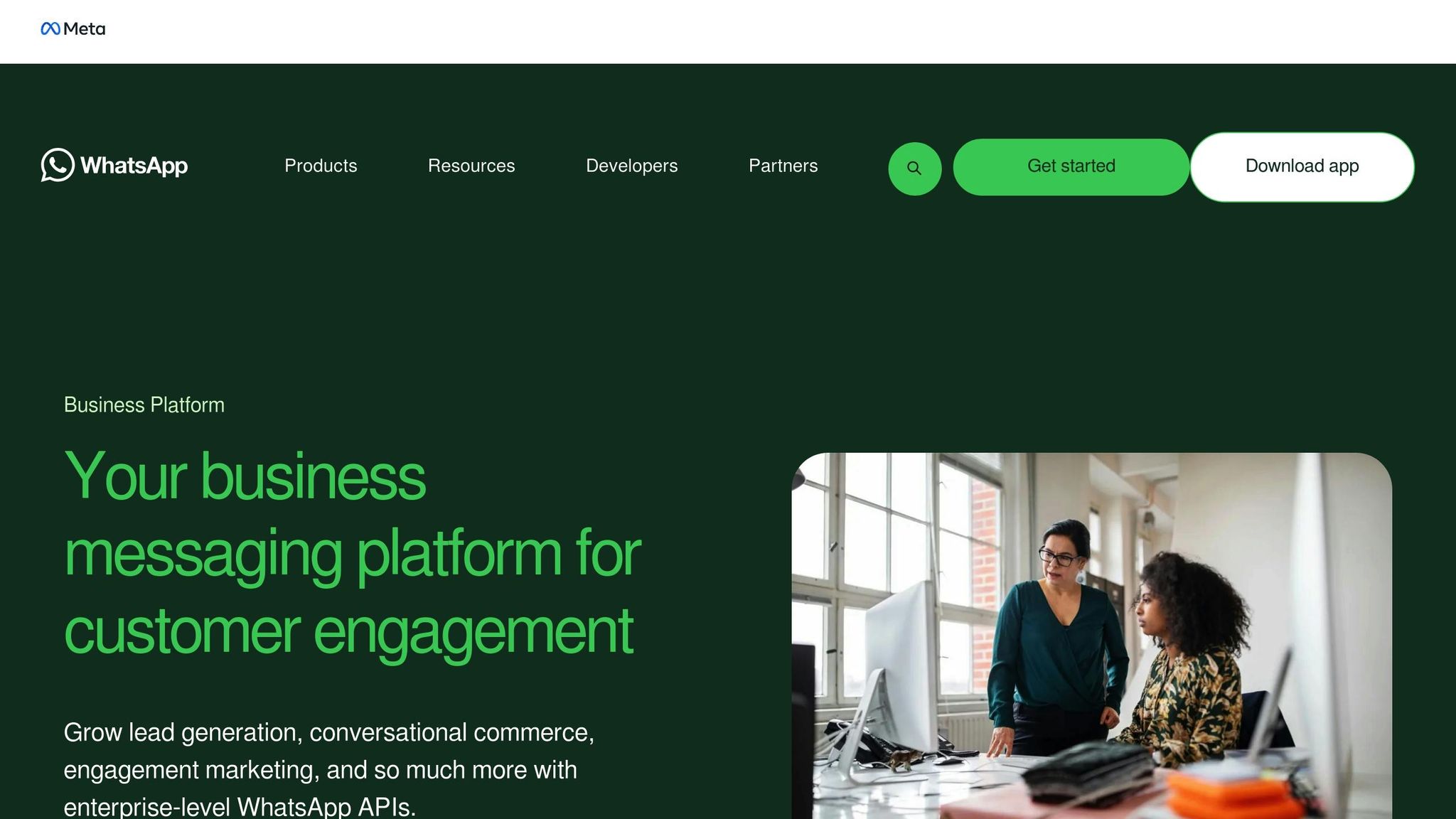
WhatsApp Business templates play a key role in reaching customers outside the 24-hour service window. These templates are pre-designed, reusable formats that businesses must use when contacting customers beyond the initial interaction period. However, every template needs to pass WhatsApp's review process before it can be used, ensuring compliance with platform policies and proper categorisation.
WhatsApp closely monitors user interactions with these templates. If a template receives too many spam reports or blocks, it could be temporarily paused for 3–6 hours or, in severe cases, permanently deactivated. This makes it essential to balance creativity with quality. Understanding the difference between transactional and promotional templates can further refine your messaging strategy.
Transactional vs. Promotional Templates
WhatsApp divides templates into three main categories: Marketing (promotional), Utility (transactional), and Authentication. Each serves a specific purpose:
- Marketing Templates: These are designed to boost engagement and sales. Examples include abandoned cart reminders, discount offers, or announcements about new product launches.
- Utility Templates: These focus on facilitating transactions, such as sending order confirmations, shipping updates, or payment reminders.
- Authentication Templates: These are strictly for one-time passcodes (OTPs) used in login or account verification processes.
The distinction between these categories is critical because WhatsApp charges differently based on the template type. For example, using promotional language in a utility template can lead to rejection or reclassification as a marketing template. When sending an order confirmation, it’s best to stick to straightforward details and avoid adding upsell messages or coupon codes.
For better conversion rates, you might consider using templates that create urgency - like limited-time offers with countdown timers - or templates that simplify actions, such as one-tap coupon code copy buttons. Keep in mind that marketing templates require explicit user opt-in and are subject to frequency limits per user.
Once you’ve defined the appropriate template type, the next step is ensuring their successful delivery.
Ensure Message Delivery with Approved Templates
Using approved templates isn’t just about following the rules - it can also boost your message delivery rates. Marketing messages sent through the Marketing Messages API, for instance, can achieve up to 9% higher delivery rates for engaging content compared to the standard Cloud API.
To ensure your templates meet approval standards, follow these best practices:
- Naming Templates: Use lowercase names with only alphanumeric characters and underscores - no spaces. Instead of generic names like "template_01", opt for descriptive ones like "order_update" or "seasonal_sale_promo."
- Message Content: Keep messages within the 1,024-character limit and format variables as {{1}}, {{2}}, etc., with clear context. Avoid standalone "floating parameters" that can confuse the message structure.
- Utility Templates: Avoid promotional language and ensure the format is clean and professional. Include sample content for placeholders when submitting your templates.
- Marketing Templates: Provide clear opt-out options, such as "Stop" or "Unsubscribe" buttons, to maintain high-quality scores.
Additionally, WhatsApp respects user preferences. If a user opts out of receiving offers or announcements, any attempt to send them a marketing template will result in an error (code 131050). To avoid such issues, ensure you’ve obtained explicit opt-in consent from users, clearly stating your business name and the type of messages they’ll receive. Keeping detailed opt-in records is crucial for compliance.
Personalise Messages with Customer Data
When you move beyond basic segmentation and truly personalise your messages, you open the door to stronger customer connections. Generic broadcasts often feel like spam, but tailored messages? They resonate. In fact, personalised WhatsApp campaigns can lead to an average 54% increase in customer spending. And here's another eye-opener: 92% of shoppers are more likely to buy when they receive recommendations that are tailored to their preferences.
Use Customer Information in Messages
To make personalisation work, you need to tap into real-time customer data. Sync your WhatsApp with tools like your CRM, POS, or e-commerce platform. This allows you to use dynamic variables - like {{1}} for a customer’s name, {{2}} for their last purchase, or {{3}} for products they’ve browsed. For instance, Tata CLiQ’s CRM integration in October 2021 is a success story worth noting. Their campaign generated $500,000 in sales in just one month, achieved a 57% click-through rate, and made customers 1.7 times more likely to purchase compared to other channels.
Behavioural triggers are another powerful tool. Send reminders to customers who abandon their carts, or notify them when a wish-listed item goes on sale. Take Matahari, an Indonesian retailer, as an example. In 2025, they used WhatsApp to send exclusive, personalised offers to high-value customer segments, achieving an impressive 6.5% conversion rate - far above the industry average of 2.6%. The secret? Every message answered the customer's silent question: "What’s in it for me?"
This approach not only makes communication feel personal but also helps establish trust.
Build Trust Through Personalisation
Using details like a customer’s name or past purchases turns your brand into more than just a seller - it makes you a trusted ally. Keep the tone conversational but professional, and avoid overloading messages with emojis. For the UAE market, timing is critical. Send messages only between 6:00 AM and 10:00 PM, and always display prices in AED (e.g., AED 299.00). Most importantly, only send personalised messages to customers who have explicitly opted in. This not only protects your quality rating but ensures your messages are welcomed, not blocked.
Track Message Performance and Conversion Data
Fine-tuning your messaging strategy doesn’t stop at crafting tailored content - it’s equally important to measure how well it performs. Without tracking, you’re left guessing which campaigns bring in sales and which ones eat into your ROI.
Monitor Key Performance Metrics
Start with WhatsApp Manager to get a clear picture of your campaign’s performance. Here, you can track essential metrics like the number of messages sent, delivered, and read. Pay close attention to read rates, click-through rates, and conversion rates, as these indicators reveal what’s driving sales. High open rates and fast responses are great, but it’s the post-click interactions that truly tell the story.
Keep an eye on your quality rating in WhatsApp Manager. If customers block or report your messages, your account could be flagged as low quality, which would limit your reach. A sudden increase in opt-out rates might point to issues with your messaging frequency or content, making it harder to scale campaigns effectively in the UAE.
Lastly, connect these insights to your paid ad campaigns to ensure every interaction with customers adds value.
Connect WhatsApp Leads to Paid Ads
Clicks are often mistaken for conversions, but they’re not the same. A click doesn’t guarantee a lead, let alone a sale. What matters is tracking the actual conversations that happen after a click.
This is where WAConversionTracking changes the game. Unlike traditional tools that only track clicks, this tool captures real WhatsApp chats, along with GCLID (Google Click ID) and UTM parameters, and automatically sends them back to Google Ads as conversions. The setup is simple - no developer needed - and the data you gain can supercharge your Smart Bidding strategies.
For businesses running Meta ads, the process is similar. Meta attaches a Click ID (fbclid) to URLs in your WhatsApp marketing templates. To retain this data, ensure your CRM or website is configured to handle these parameters. Be cautious with URL shorteners, as they might strip out this valuable information. Additionally, tools like Meta Pixel or Conversions API (CAPI) can help you track key down-funnel actions, such as "Add to Cart" or "Purchase". With Meta’s last-touch attribution model, if a customer interacts with both an Instagram ad and a WhatsApp message before buying, the conversion is credited to the most recent interaction.
To get an even clearer picture, build an attribution table to follow the full customer journey. Include details like the message template used, phone number, read timestamp, and event timestamp. This lets you see where prospects drop off and which messages perform best. You can also use A/B testing to refine your approach - experimenting with different CTA buttons, media formats, and timing to find the most cost-effective version for driving conversions.
Conclusion
WhatsApp marketing thrives on building a permission-based audience and driving sales through thoughtful, customised interactions. To succeed, focus on key practices like obtaining opt-in consent and segmenting your audience effectively.
Keep your messages concise and to the point - three to five sentences work best. Add value by incorporating rich media and interactive buttons to encourage immediate action. In the UAE, timing matters; early weekday afternoons or Friday evenings often see the highest engagement rates. Using pre-approved WhatsApp Business API templates ensures your messages are delivered seamlessly.
Personalisation is the secret to boosting engagement. Including customer names, past purchases, or browsing history makes your messages feel relevant and tailored. Success stories from leading brands show how this approach can make a real difference.
Don’t forget to measure your results. Tools like WAConversionTracking can capture WhatsApp interactions - complete with GCLID and UTM parameters - and feed them directly into Google Ads as conversions. This data supports Smart Bidding and helps scale campaigns efficiently. With WhatsApp’s strong potential for driving conversions, focusing on meaningful metrics is a must.
FAQs
How can I ensure my WhatsApp marketing messages meet UAE regulations?
To align with UAE regulations, it’s essential to prioritise permission, data protection, and cultural awareness when crafting WhatsApp campaigns:
- Get clear consent: Always make sure recipients actively opt in before receiving promotional messages. This could be through website forms, keyword sign-ups like "Text START to +971...", or in-store registrations. Keep a record of this consent, as required by the UAE’s Personal Data Protection Law (PDPL).
- Safeguard personal data: Store contact information securely, restrict access to authorised personnel only, and be transparent about data usage in your privacy policy. Working with an official WhatsApp Business Solution Provider (WABA) can help meet UAE data-security requirements.
- Adhere to local guidelines: Avoid sending unsolicited bulk messages and ensure all content respects UAE cultural values. This includes steering clear of offensive language or inappropriate visuals. Also, stick to reasonable messaging hours to respect people’s privacy.
By keeping these principles in mind, you can run WhatsApp campaigns that are both effective and fully compliant with UAE standards.
What is the best time to send WhatsApp marketing messages in the UAE for maximum engagement?
The best time to send WhatsApp marketing messages in the UAE is typically between 7:00 pm and 10:00 pm UAE local time. These evening hours are when most people are likely to be active on their phones, making it an ideal window to capture their attention. This timing fits well with the daily routines of people in the UAE, ensuring your messages reach them when they are most receptive.
To optimise your strategy, it’s worth experimenting with this timeframe and fine-tuning based on how your audience responds and engages.
How can I personalise WhatsApp messages to boost conversions effectively?
To make WhatsApp messages feel personal and engaging, think of them as one-on-one conversations rather than generic broadcasts. Incorporate dynamic fields like the recipient's first name, a recent purchase (e.g., "Your AED 199.00 Al Mansour perfume is ready!"), or location-based perks (e.g., "Enjoy free delivery to Dubai Marina!"). Use customer data - such as their order history, browsing patterns, or loyalty status - to create offers and recommendations that feel relevant and timely.
Maintain a friendly and culturally aware tone. For example, starting with an Arabic greeting like "السلام عليكم" followed by an English message feels natural and welcoming in the UAE. Stick to British-English spelling, such as "favourite", to align with local preferences. Timing matters too - schedule messages thoughtfully, avoiding Ramadan fast-breaking hours unless the content relates to food. Generally, campaigns perform best between 9:00 AM and 8:00 PM GST (UTC+4).
Make your messages visually appealing by using localised visuals and emojis. High-quality product images set in UAE settings or emojis like 🌙 for Ramadan and 🎉 for Eid can make your content more engaging. Add a clear and time-sensitive call-to-action to create urgency, such as "Reply 'YES' before 31/12/2026 to claim your AED 50 discount." By blending personalisation, cultural understanding, and visually engaging elements, your messages can go beyond simple communication and foster meaningful customer connections that drive results.